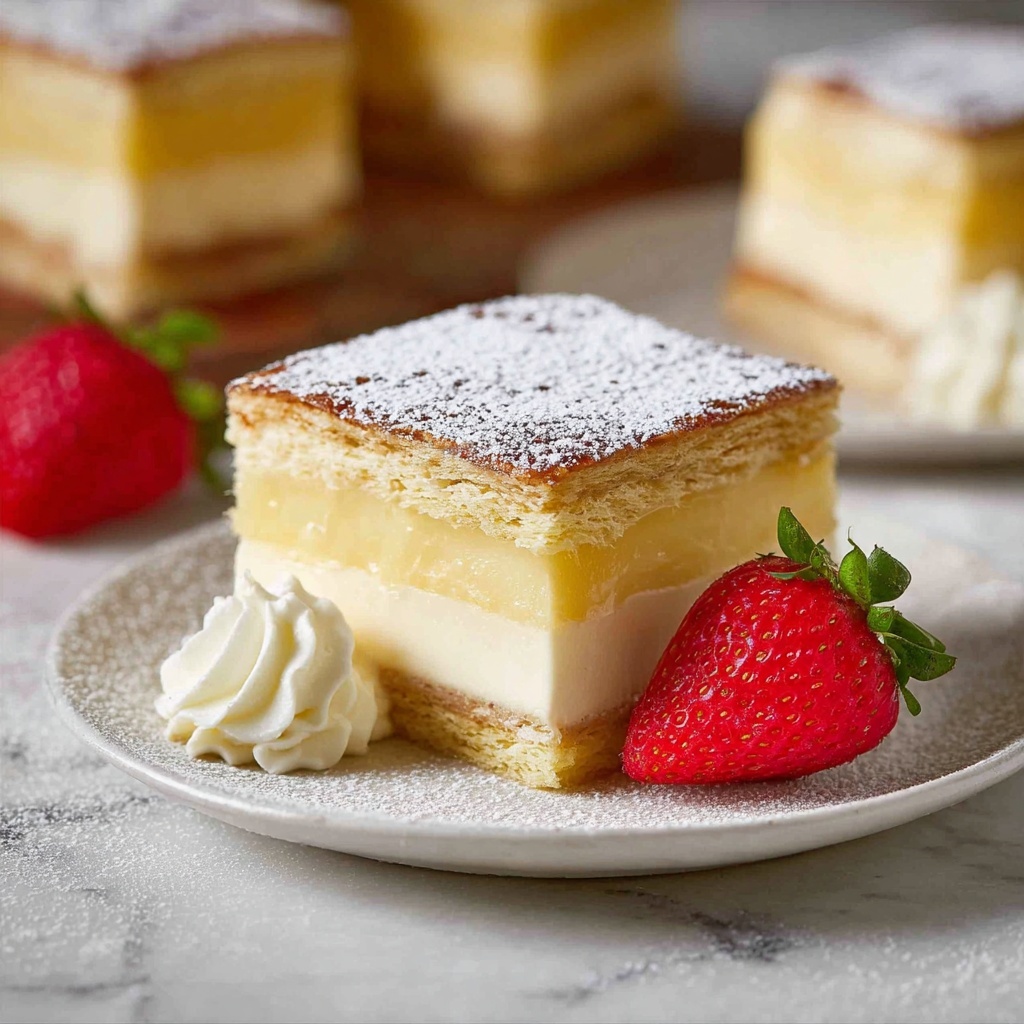
If you have a soft spot for desserts that surprise and delight, you absolutely must try the Magic Three Layer Custard Cake (From One Batter) Recipe. This enchanting cake transforms a single, simple batter into three distinct layers—fluffy cake on top, creamy custard at the bottom, and a delicate middle layer bridging the two. The magic lies in its humble ingredients and straightforward method, making it an irresistible treat that feels like a treasured secret passed among friends. Each bite brings together silky custard, airy sponge, and buttery richness in perfect harmony.
Ingredients You’ll Need
The beauty of the Magic Three Layer Custard Cake (From One Batter) Recipe is how uncomplicated the ingredients are, yet how each one plays a pivotal role in creating those signature layers. From the eggs that give structure and lightness, to the butter that adds richness and tenderness, every component is essential.
- 4 eggs (yolks and whites separated, room temperature): Fresh eggs give the best texture for the cake and custard layers.
- 3/4 cup (150g) sugar: Adds sweetness and helps the custard set perfectly.
- 1 tsp vanilla extract: Infuses a warm, comforting fragrance into the cake.
- 1 stick (4oz / 125g) unsalted butter, melted: Brings richness and moisture to the batter for that tender crumb.
- 3/4 cup (115g) plain all-purpose flour: The base for the flour structure in the cake layer.
- 2 cups (500 ml) lukewarm milk (full fat or low fat, but not zero fat): Creates the silky custard at the bottom and ensures smooth batter consistency.
- Icing sugar (powdered sugar), for dusting: A pretty finish that adds a touch of sweetness on top.
- Fresh strawberries: A bright, juicy contrast that pairs beautifully with the custard cake.
- Whipped cream: Adds lightness and elegance when serving.
How to Make Magic Three Layer Custard Cake (From One Batter) Recipe
Step 1: Preparation and Mixing the Egg Whites
Start by preheating your oven to 325°F (160°C) to ensure it’s ready when your batter is perfect. Butter an 8-inch square cake tin, which not only stops sticking but helps develop a beautiful crust. Then whisk the egg whites until stiff peaks form—this is key for the airy top layer that makes this cake a star.
Step 2: Beating the Yolks and Sugar
In a separate bowl, beat the egg yolks with sugar until pale and fluffy. This quick but important step helps dissolve the sugar and introduces air for volume. Your batter’s texture starts to develop here, promising softness ahead.
Step 3: Adding Vanilla and Butter
Mix in the vanilla extract and melted butter until all is well combined. The butter enriches the batter while the vanilla deepens the flavor, giving the cake its comforting, homey feel.
Step 4: Incorporating Flour
Gently add the all-purpose flour to the yolk mixture and beat just until combined. Overmixing here can make the cake dense, so keep it tender by mixing lightly.
Step 5: Adding Milk Gradually
Slowly pour lukewarm milk into the batter while continuing to beat. Adding it bit by bit ensures the liquid blends smoothly without lumps, setting the right consistency needed for the custard to form during baking.
Step 6: Folding in the Egg Whites
With a spatula, fold the stiff egg whites into the batter in thirds. Take care not to deflate the whites, as their airiness works magic in forming the delicate top layer. A few small lumps are perfectly fine here; they will bake out.
Step 7: Baking
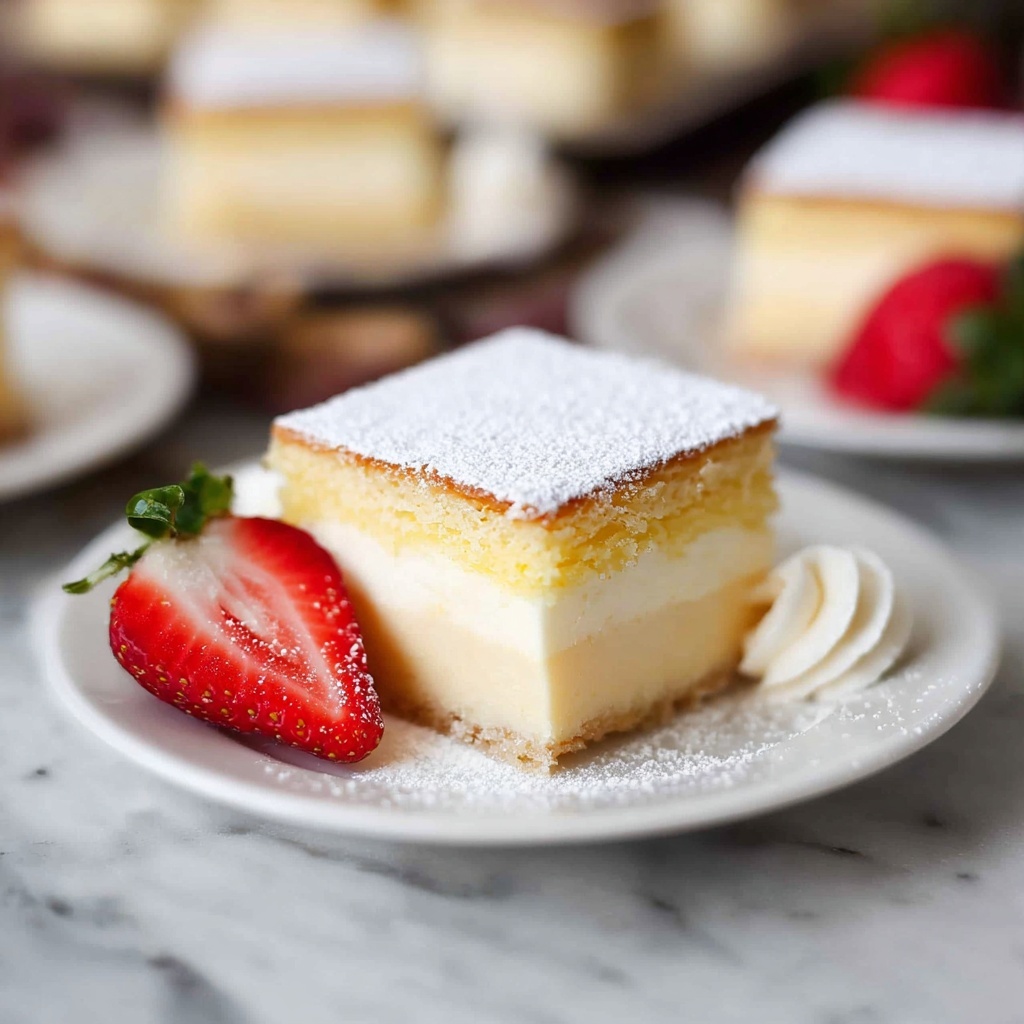
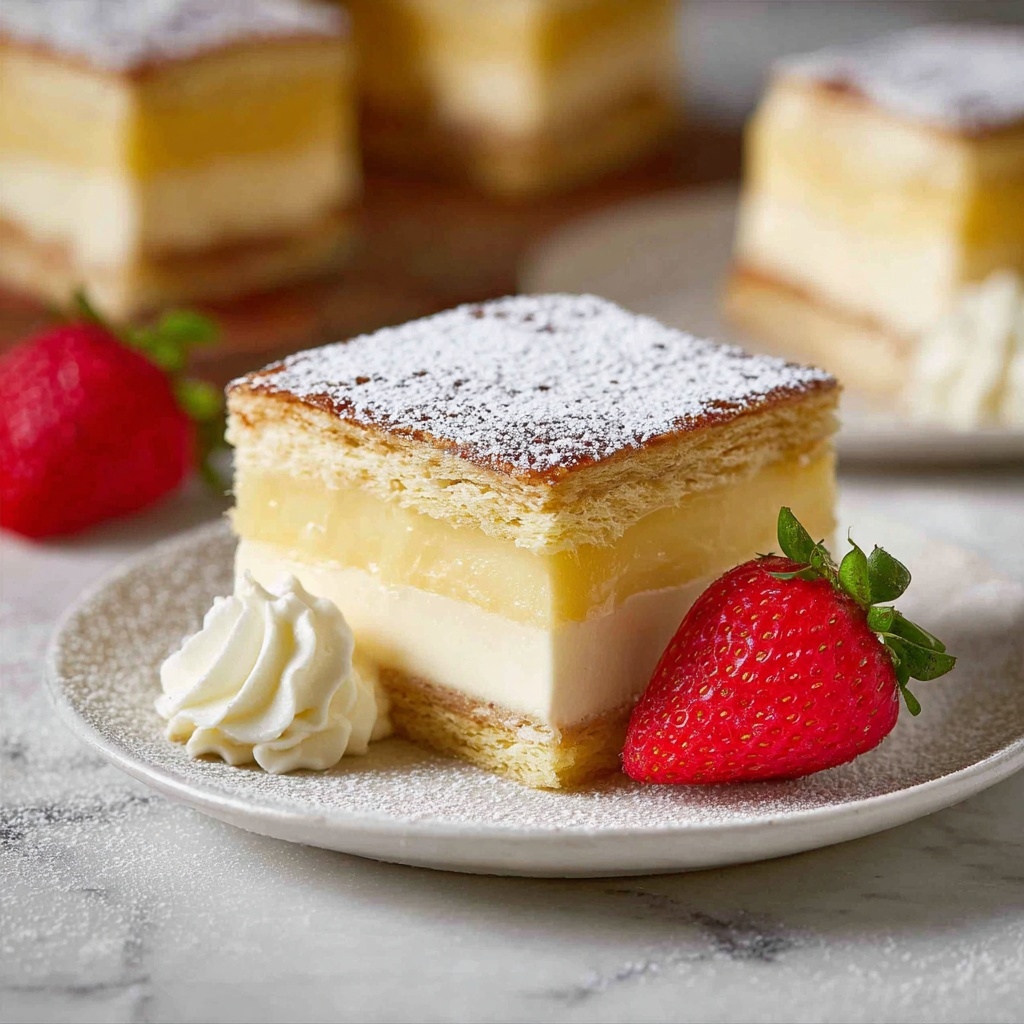
Pour the finished batter into your prepared tin and bake for around 50 minutes. The oven temperature and time ensure the batter settles into three distinct layers—custard bottom, soft middle, and fluffy sponge top—that will amaze you every time you cut into it.
How to Serve Magic Three Layer Custard Cake (From One Batter) Recipe
Garnishes
A simple dusting of icing sugar on top adds a delicate sweetness and a pretty finish that catches the light beautifully. Scatter fresh strawberries as a natural, juicy garnish that cuts through the richness and complements the vanilla notes elegantly. A dollop of fresh whipped cream brings added lightness and creaminess to each slice.
Side Dishes
This custard cake pairs wonderfully with fresh fruit salads or a tangy berry compote that cuts through the buttery richness. For a cozy touch, serve it alongside a hot cup of black coffee or delicate herbal tea to enhance the flavors without overpowering the cake.
Creative Ways to Present
For a charming dessert centerpiece, try slicing the cake into squares and serving on vintage plates with a stripe of berry coulis. Or, arrange a platter with alternating slices and dollops of lightly sweetened whipped cream topped with mint leaves for a refreshing burst of color and flavor that’s sure to impress guests.
Make Ahead and Storage
Storing Leftovers
Your Magic Three Layer Custard Cake (From One Batter) Recipe keeps well covered in the fridge for up to three days. Store it in an airtight container to preserve moisture and prevent it from picking up other odors, ensuring every bite tastes as magical as the first.
Freezing
Although it’s best enjoyed fresh to appreciate the distinct layers, you can freeze slices wrapped tightly in plastic wrap and foil for up to one month. Thaw in the fridge overnight before serving, though the texture of the custard may soften a bit from freezing.
Reheating
When you’re ready to enjoy leftovers, warm individual slices gently in the microwave for 10-15 seconds just to take the chill off. Avoid overheating to maintain the custard’s lovely creaminess and the soft sponge’s delicate crumb.
FAQs
Can I use skim milk instead of full-fat milk for this recipe?
While skim milk can be used, full-fat or low-fat milk is preferable to achieve that rich, creamy custard layer. Zero-fat milk might result in a thinner, less luscious custard texture.
What causes the three separate layers in this cake?
The separation happens naturally during baking due to the differences in density and airiness of the batter components—the heavier custard sinks to the bottom, the airy egg whites rise to the top, and the batter creates a soft middle layer.
Why do I need to fold the egg whites gently?
Folding gently keeps the air trapped in the egg whites, which is crucial for creating the fluffy sponge layer. Overmixing can deflate them and flatten the cake.
Can I make this recipe gluten-free?
Yes! Substitute the all-purpose flour with a gluten-free blend, preferably one designed for baking, to maintain the right texture and structure in your custard cake.
Is it possible to make this cake without a mixer?
It’s definitely possible, though it requires a bit more elbow grease. Whisk the egg whites by hand until stiff peaks form and carefully beat the yolks and sugar. Patience will get you there, and the results are well worth the effort!
Final Thoughts
The Magic Three Layer Custard Cake (From One Batter) Recipe is one of those delightful desserts that feel like a celebration wrapped in simplicity. It’s a humble recipe with wow-factor results that you’ll want to share with family, friends, or simply treat yourself. Don’t hesitate to dive into this recipe—you might find your new favorite dessert that’s as fun to make as it is to savor.
Print
Magic Three Layer Custard Cake (From One Batter) Recipe
- Prep Time: 20 minutes
- Cook Time: 50 minutes
- Total Time: 1 hour 10 minutes
- Yield: 9 to 12 servings
- Category: Dessert
- Method: Baking
- Cuisine: Western
Description
This Magic Three Layer Custard Cake is a delightful dessert that magically separates into three distinct layers while baking: a soft sponge cake on top, a creamy custard in the middle, and a rich caramelized base. Made from a single batter, it combines the flavors of vanilla and buttery milk custard, topped with fresh strawberries and whipped cream for an irresistible treat.
Ingredients
Custard Cake Batter
- 4 eggs, yolks and whites separated (at room temperature)
- 3/4 cup (150g) sugar (ordinary or caster sugar)
- 1 tsp vanilla extract
- 1 stick (4oz / 125g / 1/2 cup) unsalted butter, melted
- 3/4 cup (4oz / 115g) plain all-purpose flour
- 2 cups (500 ml / 1 pint) milk, lukewarm (full fat or low fat, but not zero fat)
Topping
- Icing sugar (powdered sugar), for dusting
- Fresh strawberries
- Whipped cream
Instructions
- Preheat Oven: Preheat your oven to 325°F (160°C) for a standard oven or use fan forced/convection if available to ensure even baking.
- Prepare Cake Tin: Butter an 8″ x 8″ (20cm x 20cm) square cake tin thoroughly to prevent sticking.
- Whip Egg Whites: Using a mixer, beat the egg whites until stiff peaks form. Set aside carefully to maintain the airiness.
- Beat Egg Yolks and Sugar: In a separate bowl, beat the egg yolks and sugar until the mixture turns pale yellow, approximately 1 minute.
- Add Vanilla and Butter: Add vanilla extract and melted butter to the egg yolks mixture. Beat well until fully incorporated, about 30 seconds to 1 minute.
- Add Flour: Incorporate the flour into the wet mixture and beat until just combined, avoiding overmixing.
- Mix in Milk: Slowly pour the lukewarm milk into the batter while beating continuously. If using a handheld mixer, add milk in increments of 1/4 cup, beating between additions to ensure smoothness.
- Fold in Egg Whites: Gently fold one-third of the beaten egg whites into the batter using a spatula. Repeat twice more until all whites are just incorporated. Be careful not to deflate the batter; it should be thin and pourable with some small lumps of egg whites remaining.
- Pour Batter: Pour the thin batter evenly into the prepared butterfly cake tin.
- Bake: Bake in the preheated oven for approximately 50 minutes or until the custard is set and the top layer appears golden and spongy. A toothpick inserted in the center should come out mostly clean with slight moist crumbs.
- Cool and Serve: Allow the cake to cool in the tin to room temperature, then dust with icing sugar. Serve garnished with fresh strawberries and a dollop of whipped cream for a perfect finishing touch.
Notes
- Ensure eggs are at room temperature for best volume and texture.
- Do not overmix the batter after adding flour to keep the sponge light.
- The milk must not be zero fat as fat content is essential for proper custard texture.
- Some lumps of egg whites in the batter are normal and contribute to the layered structure upon baking.
- Use a light hand when folding in egg whites to preserve airiness.
- Let the cake cool completely to allow layers to set before slicing.