Description
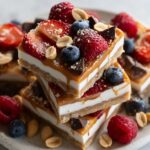
Peanut Butter Yogurt Bark is a creamy, refreshing frozen snack made by blending Greek yogurt with peanut butter and sweeteners, then spreading it thinly and topping with crunchy peanuts, fresh berries, chocolate chips, and optional seeds before freezing into a delightful bark. It’s perfect for a healthy, protein-packed dessert or snack that combines tangy yogurt and rich peanut butter with bursts of fresh fruit and chocolate.
Ingredients
Scale
Base
- 2 cups (480 g) plain Greek yogurt (full-fat or 2% works best)
- 3 tablespoons pure maple syrup or honey
- 1 teaspoon pure vanilla extract
- Pinch of fine sea salt (optional)
Peanut Butter
- 1/3 cup (80 g) creamy peanut butter, melted or softened
- 2 tablespoons peanut butter, for drizzling
Toppings
- 1/4 cup (35 g) salted roasted peanuts, roughly chopped
- 1/3 cup (50 g) fresh berries (blueberries, raspberries, or sliced strawberries)
- 2 tablespoons mini chocolate chips or chopped dark chocolate
- 1 tablespoon chia seeds or ground flaxseed (optional, for extra texture and nutrition)
- Nonstick spray or a little neutral oil for greasing the pan
- Parchment paper
Instructions
- Prepare the pan: Line a medium baking sheet or tray with parchment paper, then lightly spritz with nonstick spray or rub with a bit of neutral oil to ease peeling later. Choose a pan sized to spread the yogurt about 1/4–1/3 inch thick for ideal freezing and texture.
- Make the yogurt base: In a medium bowl, combine Greek yogurt, maple syrup (or honey), vanilla extract, and a pinch of sea salt if using. Whisk until smooth and evenly sweetened, tasting and adjusting sweetness if needed.
- Swirl in the peanut butter: Warm 1/3 cup peanut butter until pourable, either in the microwave or stovetop. Add it to the yogurt mixture. For a uniform blend, whisk fully; for marbled effect, fold gently to leave swirls.
- Spread the yogurt mixture: Pour the yogurt mixture onto the prepared pan and use an offset spatula or spoon back to spread it evenly about 1/4–1/3 inch thick, smoothing the surface.
- Add the toppings: Evenly sprinkle chopped salted peanuts, fresh berries pressed lightly to adhere, mini chocolate chips or chopped chocolate, and optional chia or flax seeds over the surface.
- Drizzle with extra peanut butter: Warm remaining 2 tablespoons peanut butter until fluid, then drizzle thin lines over the bark decoratively for flavor and look.
- Freeze the bark: Transfer the pan carefully to the freezer, keeping it level to avoid shifting toppings. Freeze for at least 3–4 hours or until fully solid. Overnight is ideal for best texture.
- Break into pieces: Remove from freezer and lift bark out using parchment edges. Let sit 3–5 minutes at room temperature to soften slightly, then cut into squares or rectangles with a sharp knife or break by hand into rustic pieces.
- Serve and store: Serve immediately as a cool, creamy frozen snack or dessert. Store remaining pieces in an airtight container with parchment paper layers in the freezer for up to 1 month. Do not refrigerate.
Notes
- For a sweeter bark, adjust maple syrup or honey as desired in the yogurt mixture.
- Use full-fat or 2% Greek yogurt for best creamy texture; nonfat may result in icier bark.
- Swirling the peanut butter vs fully mixing changes the bark’s appearance—try both for variety.
- Fresh berries can vary seasonally; blueberries, raspberries, or sliced strawberries work well.
- Optional chia or flaxseed adds crunch and nutrition but can be omitted if preferred.
- Store in freezer only to maintain bark’s firm texture; refrigerating softens it too much.
- Let bark sit a few minutes before cutting to minimize cracking and make cutting easier.